
Bingo Board Maker
Every bingo game needs a board for the caller: a master grid that shows which numbers have been called, so winning cards can be checked. This maker gives you a 75-ball or 90-ball master board that draws numbers at random, highlights each call, reads it aloud if you like, and keeps a list of recent calls — plus a generator for proper UK-style 90-ball tickets to print for players.
- Free to use
- No sign-up
- Runs in your browser
Bingo board maker
90-ball ticket generator
Bingo Board Pack
Printable bingo caller boards for 75- and 90-ball games, call tally sheets, 60 ready-made UK-style 90-ball tickets and an event game plan.
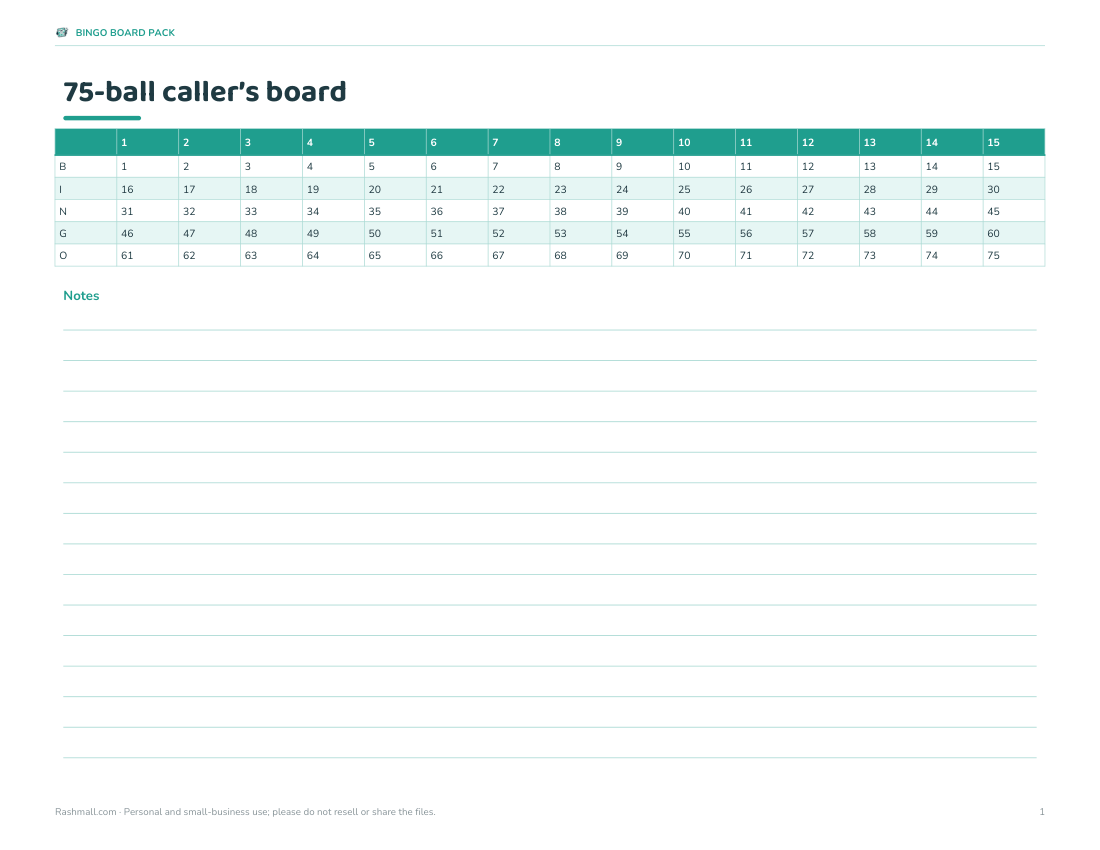
- 75-ball board (PDF)
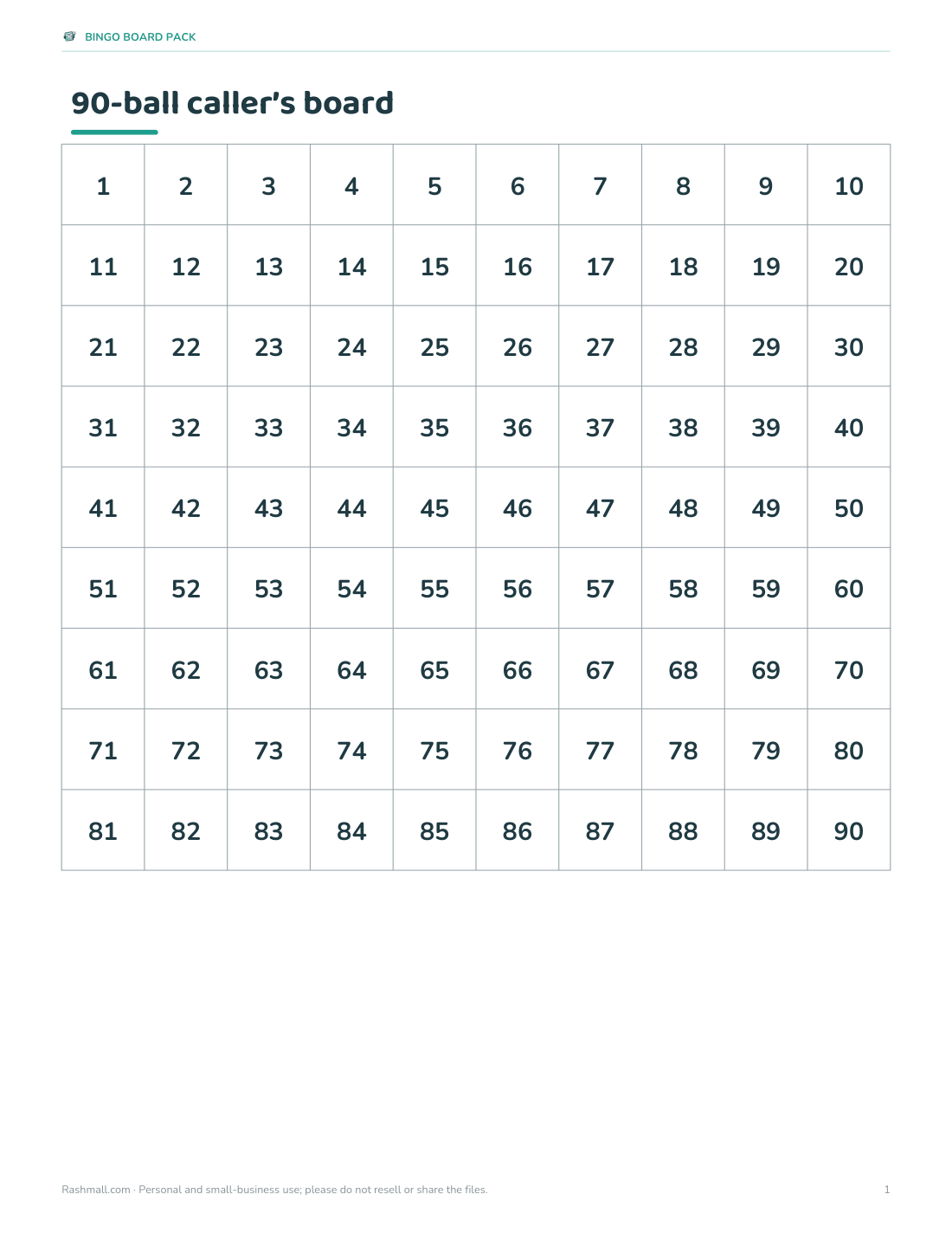
- 90-ball board (PDF)
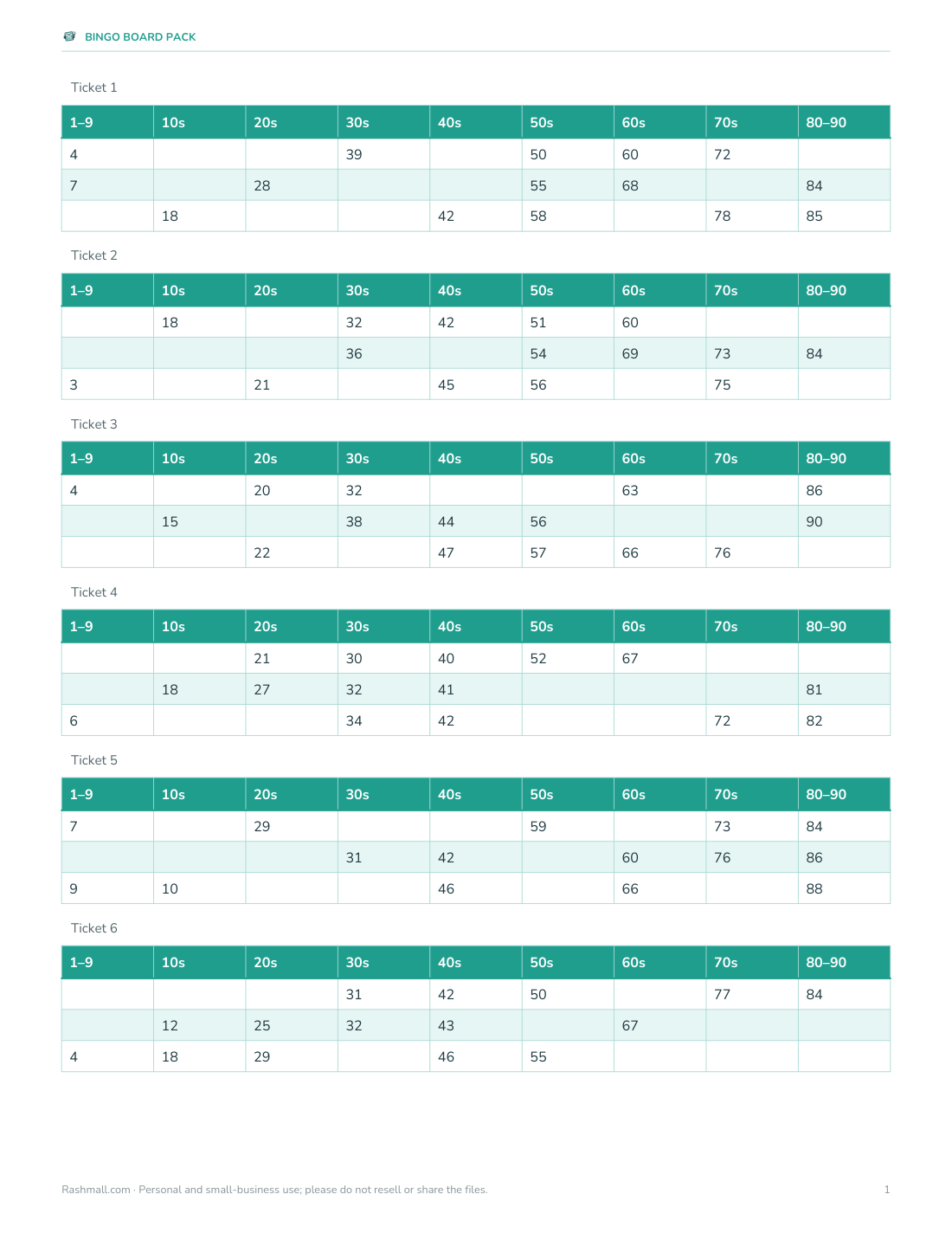
- 60 tickets (PDF)
- Call tally (PDF/DOCX/XLSX)
- Event plan (PDF/DOCX)
Formats: PDF, DOCX, XLSX. Instant download after payment (link valid 72 hours, up to 5 downloads). AI-assisted: the templates were drafted with AI help and reviewed and laid out before publishing.
$5.00 USD, one-time 5 files · about $1.00 each
- Instant download
- 7-day refund
- Secure checkout by Stripe
7-day money-back guarantee. Full refund within 7 days of purchase, even after you download.
Free sample: Caller Board 75 (PDF, 58 KB)
Full refund within 7 days — see the refund policy and license.
Free printables
Single sheets you can print right now, no sign-up. The full pack adds every sheet in one download plus the editable files.
 Printable 75-Ball Bingo Caller Board
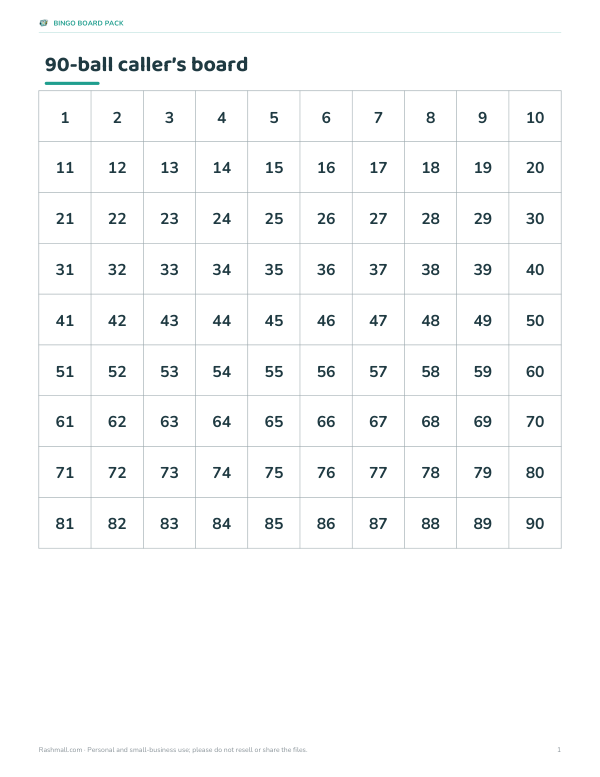 Printable 90-Ball Caller Board
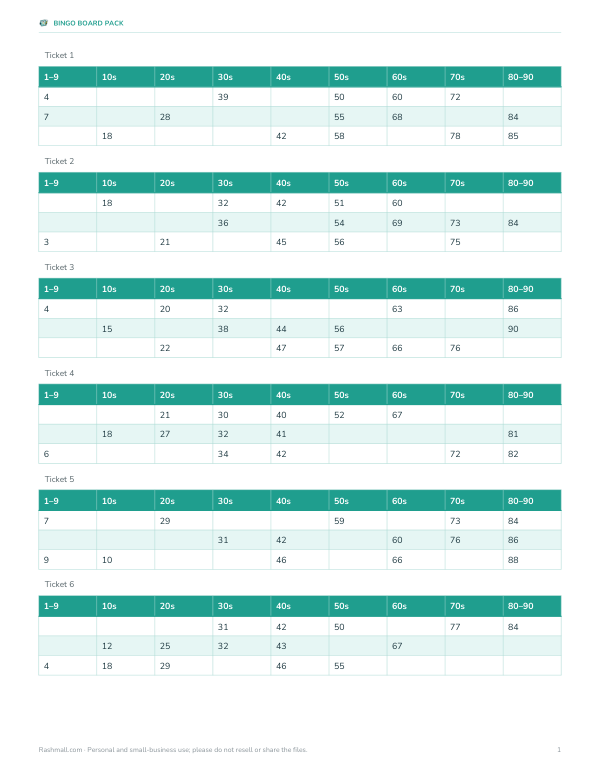 Printable Bingo Ticket Pack
 Printable Bingo Call Tally Sheet
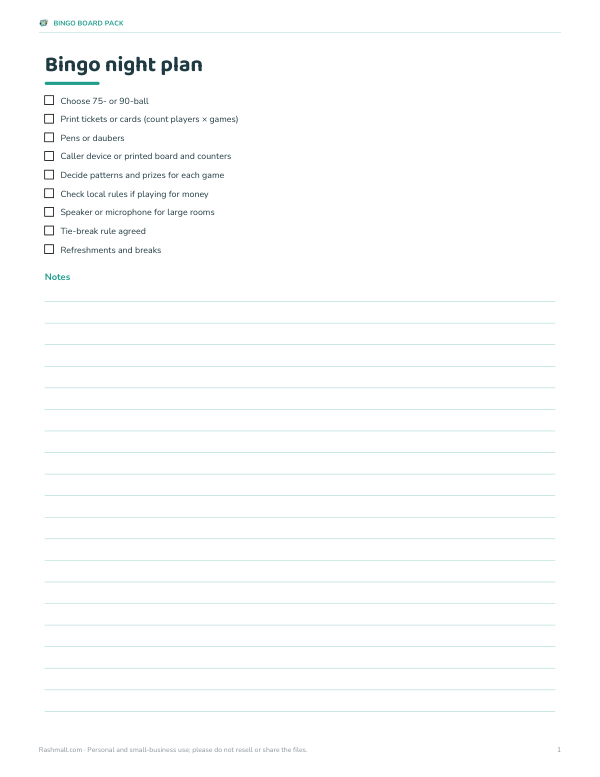 Printable Bingo Night Plan
What a bingo board is for
The caller’s board (also called a master board or flashboard) lists every number in the game. As each ball is drawn, the caller marks it, so that when a player shouts “Bingo!” the caller can check the claimed numbers against the board quickly and fairly. In halls, the board is a lit display; at home, a laptop or tablet on this page — or a printed board with counters — does the same job.
75-ball vs 90-ball bingo
| 75-ball | 90-ball | |
|---|---|---|
| Where | United States and Canada | UK, Ireland, Australia and many other countries |
| Card | 5 × 5 grid with a free centre square | 3 rows × 9 columns with 15 numbers |
| Columns | B 1–15, I 16–30, N 31–45, G 46–60, O 61–75 | 1–9, 10–19 … 80–90 |
| Winning patterns | Lines, four corners, blackout and custom shapes | One line, two lines, full house |
| Calls | Letter and number, e.g. “B-12” | Number, often with a nickname, e.g. “Legs eleven” |
How 90-ball tickets are made
- Each ticket has 3 rows and 9 columns.
- Each row has exactly 5 numbers and 4 blanks — 15 numbers per ticket.
- Column 1 holds 1–9, column 2 holds 10–19, and so on; the last column holds 80–90.
- Every column has at least one number and at most three.
- Numbers in a column are in ascending order from top to bottom.
The generator above follows all five rules. In commercial books, tickets come in strips of six that together contain every number from 1 to 90 exactly once, so each player with a full strip marks a number on every call; single random tickets like these don’t guarantee that, which is fine for home games.
Running a game
- Announce the game and the winning pattern (e.g. one line, then two lines, then full house).
- Press Call next number, read the call clearly and give players time to mark.
- When someone claims, ask them to read out their numbers and enter them in Check a card.
- If all numbers are called, the claim is valid; continue for the next prize or start a new game.
- Print the board at the end if you want a record of the calls.
Worked example
At a family 90-ball game with six printed tickets, after 38 calls a player claims one line with 7, 23, 41, 66 and 85. Entered in the checker, all five numbers show as called — a valid claim. Later another claim for two lines includes 52, which hasn’t been drawn yet: the checker flags it as “not yet called”, and play continues. On average, a single line on one ticket takes longer than you might expect — often 30 or more calls — while a full house typically needs 70 or more.
Traditional 90-ball calls
| Number | Call |
|---|---|
| 1 | Kelly’s eye |
| 2 | One little duck |
| 11 | Legs eleven |
| 22 | Two little ducks |
| 45 | Halfway there |
| 88 | Two fat ladies |
| 90 | Top of the shop |
Callers in UK halls often say the individual digits and the number, such as “seven and six, seventy-six”. Nicknames vary by region and many halls have updated older ones.
Fair play
Numbers are drawn with the browser’s cryptographic random number generator, so every remaining number is equally likely on each call. Undo removes only the last call, for correcting a mistaken press. For fundraisers and events with prizes, check local rules on gaming and lotteries — many places regulate bingo played for money.
Printed board or screen?
A screen works well for small groups: everyone can see the last number and the board fills in automatically. For larger rooms, connect a laptop to a TV or projector so players can check missed calls. For a power-free game — a picnic or a camping trip — print the caller’s board from the pack, draw numbered slips from a bag and cover each called number with a counter. Keep the slips out of the bag until the game ends so claims can be checked.
Variations for home games
- Speed bingo: auto-call every 4 seconds for experienced players.
- Pattern bingo (75-ball): announce a shape such as an X, a picture frame or the letter T before the game.
- Kids’ bingo: use the 75-ball board but only call B and I numbers for a short game.
- Coverall: play until one player marks every number on their ticket.
The bingo board pack
The optional pack includes printable caller’s boards for 75-ball and 90-ball games with call tally sheets, 60 ready-made 90-ball tickets, and a prize and game plan sheet for events. The board and ticket generator on this page are free.
AI-assisted content
This page was drafted with AI assistance and reviewed before publishing.
Frequently asked questions
What is a bingo master board?
The caller’s grid of all numbers, marked as each is called so claims can be checked.
How many numbers are on a 90-ball ticket?
15 — five in each of three rows.
What are the column ranges on a 75-ball card?
B 1–15, I 16–30, N 31–45, G 46–60, O 61–75.
Can it read the numbers aloud?
Yes, tick “Read calls aloud” to use your device’s speech voice.
Is the draw random?
Yes, it uses the browser’s cryptographic random number generator.
Can I print tickets?
Yes — generate up to 60 tickets and print them.